
TSCM · Technical surveillance countermeasures
TSCM methods and equipment classes
No single method is enough. We use several together and report knowing what each cannot see.
Methods and their limits
RF spectrum analysis finds transmitting devices but not recorders that do not transmit. NLJD finds objects containing electronic circuits even when switched off, but can give false alarms in metal- and electronics-dense environments. Thermal imaging shows running electronics but not a switched-off device. Optical lens detection finds camera lens glints but is weaker where light cannot reach. Line analysis (with methods such as TDR) reveals extra connections on a cable. Physical inspection complements all of them.
Equipment and calibration
The class of measuring instruments used and their maintenance/calibration status are stated in the report.
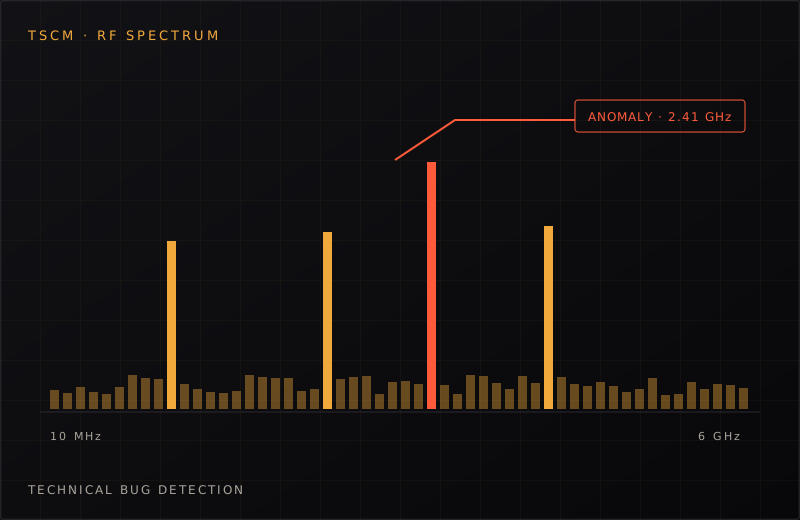
- RF spectrum analysis: transmitting devices
- NLJD: objects with electronic circuits
- Thermal imaging: running electronics
- Optical lens detection: hidden camera lenses
- TDR line analysis: extra connections on cables
- Network scan: unauthorised devices
- RF: non-transmitting recorders are invisible
- NLJD: false alarms in metal-dense environments
- Thermal: switched-off devices are invisible
- Optical: weaker where light does not reach
- TDR: wired lines only
- Network: only network-connected devices
TSCM · Technical surveillance countermeasures
How we work
Confidential initial call
We talk on a secure channel away from the space and devices you suspect. We listen to what, where and why you suspect, and define the scope.
Appointment and security
The sweep date is discussed only with the people who need to know and away from the space to be swept. No sensitive talk takes place in the space beforehand.
Physical inspection
The space and its items are inspected visually: sockets, ceiling, lighting, electronics, furniture and newly added objects.
Technical sweep
Devices are searched for with RF spectrum analysis, NLJD, thermal imaging, optical lens detection and line/network analysis.
Findings and evidence preservation
If a suspect device is found it is not moved; it is photographed and its position and technical measurements recorded. The next step is decided with you and your lawyer.
Report and recommendations
Method, equipment, findings, risks and corrective recommendations are delivered as a written report.
TSCM · Technical surveillance countermeasures
What you receive
- Method and limit explanation
- Equipment class information
- Findings interpreted in context
FAQ
Frequently asked questions
Is your equipment professional grade?
The report states the equipment class used and its calibration status.
TSCM · Technical surveillance countermeasures
Related pages
TSCM: technical bug detection
Measurement, not guesswork, tells you whether you are bugged.
Explore →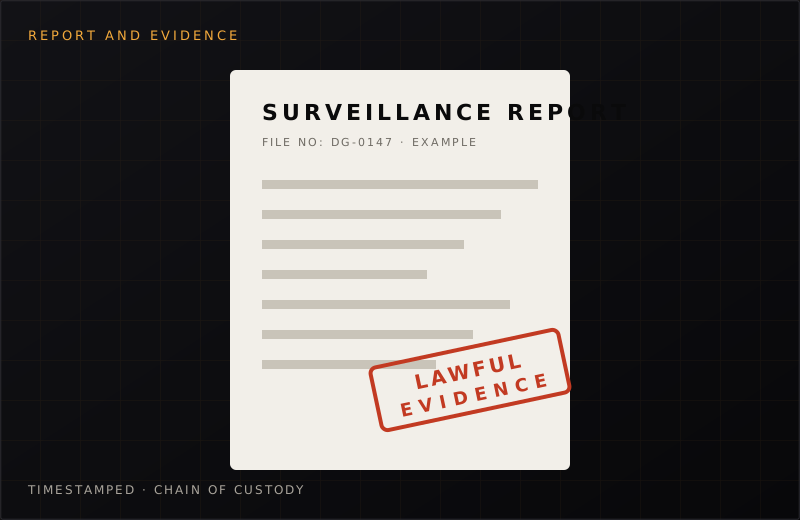
TSCM process and sample report
Knowing in advance what to expect from a sweep builds trust.
Explore →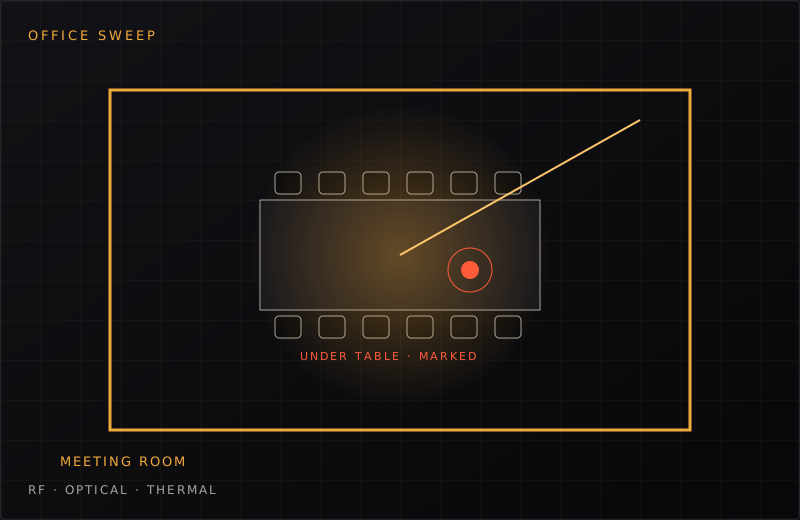
Office and meeting room bug sweep
Secure the room where your trade secrets are discussed, by measurement, before an important meeting.
Explore →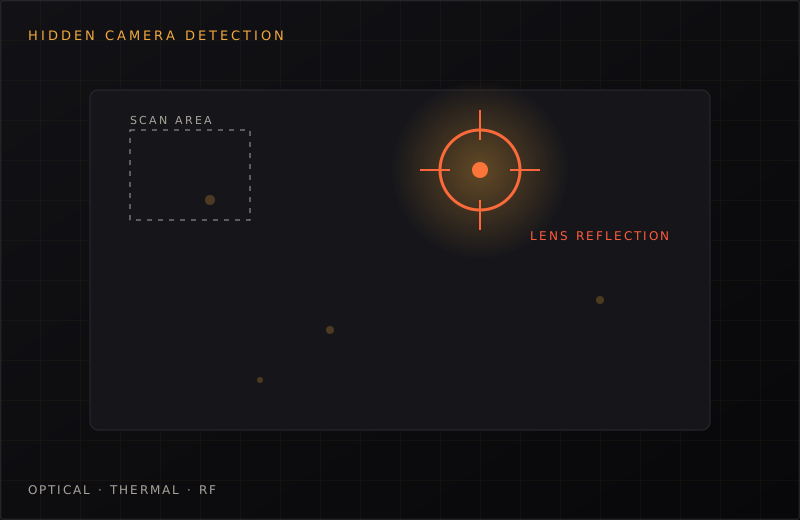
Hidden camera detection
Hidden cameras can be concealed inside everyday objects such as clocks, chargers, smoke detectors and sockets.
Explore →Legal framework: Dedektif Go works only by lawful methods. We do not wiretap, read messages or email, install unauthorised tracking software, track location without permission or access official records by covert means. Findings are reported in a form usable as evidence. Read what we do and do not do.
Let's talk first. A confidential, free initial call.
Tell us your situation and we will define the lawful route together. Your details are not shared with third parties.