
TSCM · Technical surveillance countermeasures
TSCM: technical bug detection
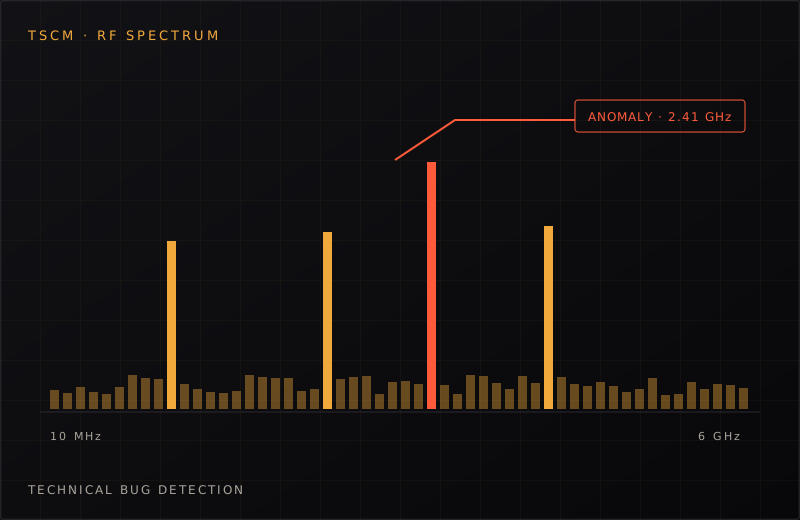
Measurement, not guesswork, tells you whether you are bugged. With RF spectrum analysis, NLJD, thermal imaging and optical lens detection we sweep your space, vehicle and devices systematically.
What is TSCM?
TSCM stands for technical surveillance countermeasures. It is a systematic technical sweep to find listening, recording, imaging and tracking equipment hidden in a space, vehicle or device. The aim is a measurable result rather than a guess. The sweep looks for transmitting devices with RF analysis, for switched-off or non-transmitting electronic circuits with NLJD and thermal imaging, for hidden camera lenses with optical methods, and for unauthorised connections on lines and networks with line and network analysis.
Who orders a sweep?
Companies in commercial negotiations, boards and R&D units, people who suspect their home during a divorce or dispute, people concerned for their personal safety, lawyers and consultants, and institutions holding sensitive meetings all use this service.
Limits of a sweep
No sweep can guarantee "absolutely clean". A sweep shows the situation at the time it is done and does not cover a device placed later. We therefore recommend periodic sweeps for risky environments. Devices that only record and do not transmit do not appear in an RF sweep; they are searched for with NLJD, thermal and physical inspection. We state these limits clearly from the start.
TSCM · Technical surveillance countermeasures
Sub-pages
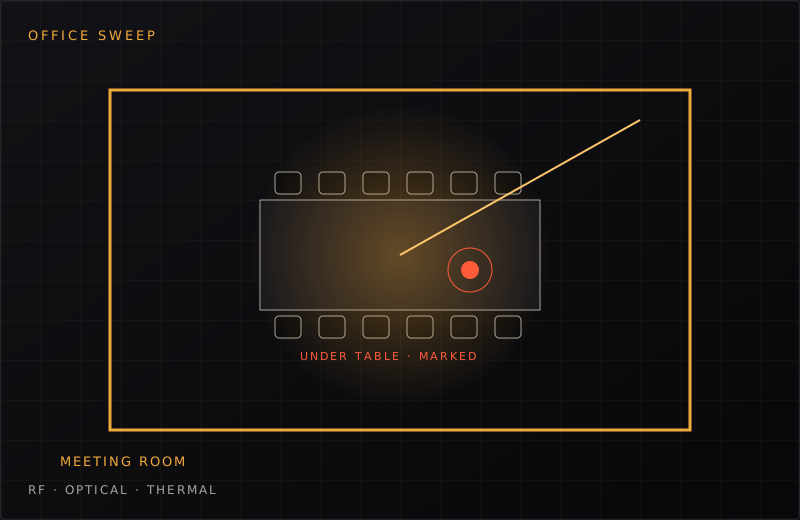
Office and meeting room bug sweep
Secure the room where your trade secrets are discussed, by measurement, before an important meeting.
Explore →Home sweep
If you feel watched at home, get an answer by measurement rather than living with the feeling.
Explore →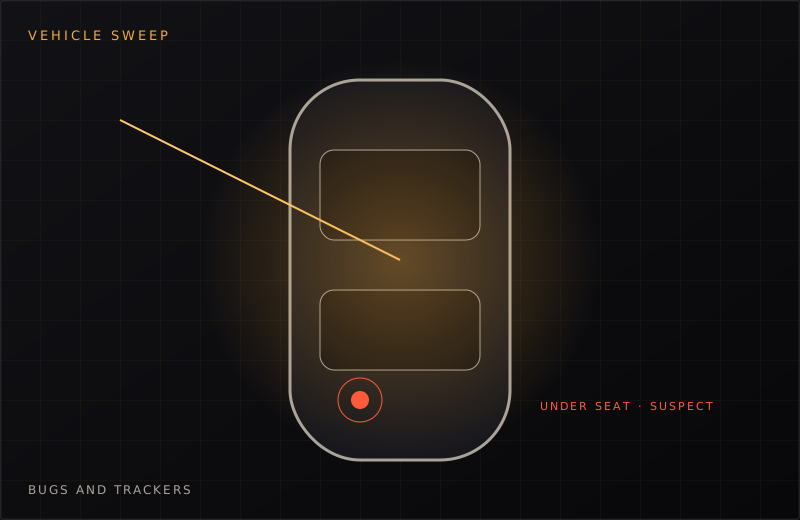
Vehicle bug and GPS tracker detection
If someone knows where you go, the vehicle is the first suspect.
Explore →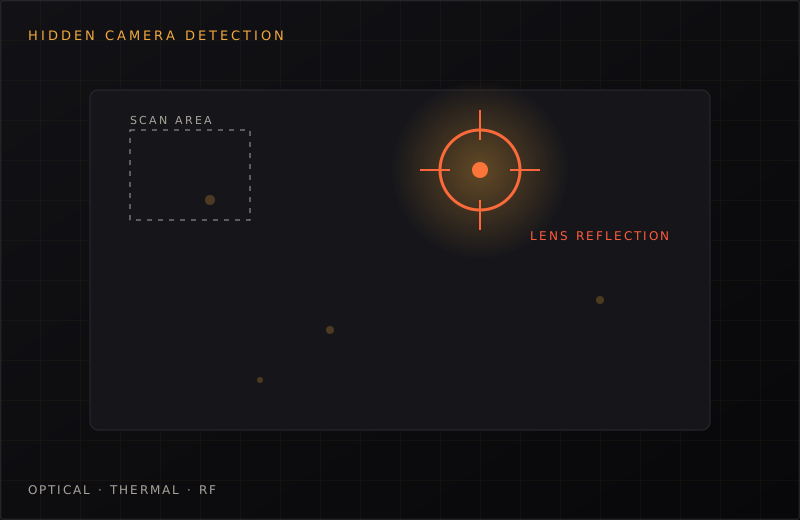
Hidden camera detection
Hidden cameras can be concealed inside everyday objects such as clocks, chargers, smoke detectors and sockets.
Explore →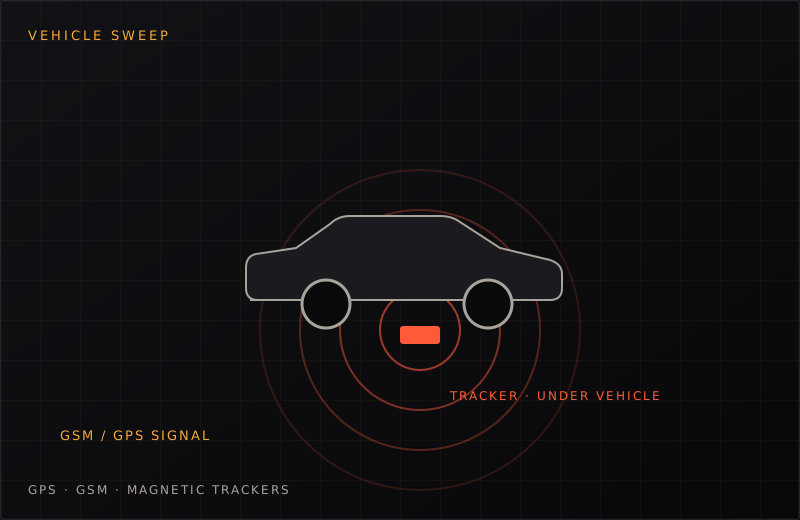
GSM and GPS tracker detection
Trackers are not limited to vehicles.
Explore →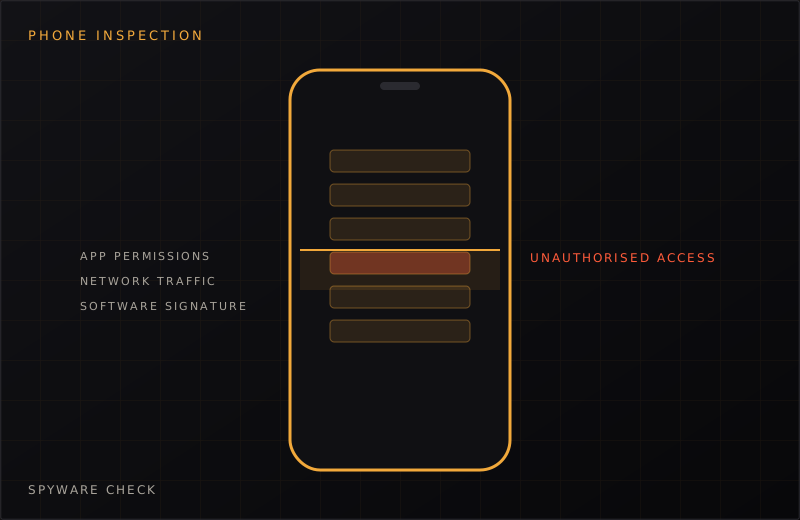
Phone spyware check
Your phone is a summary of your life.
Explore →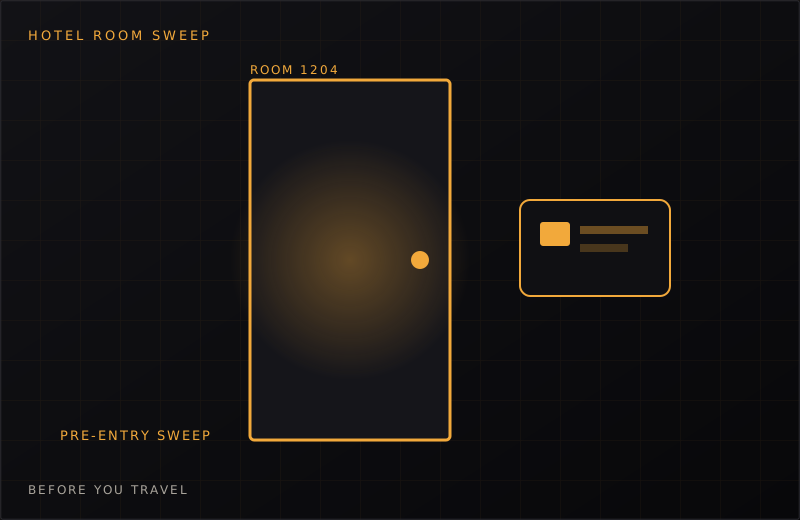
Hotel room and pre-travel sweep
The room where you stay for an important negotiation is part of the meeting.
Explore →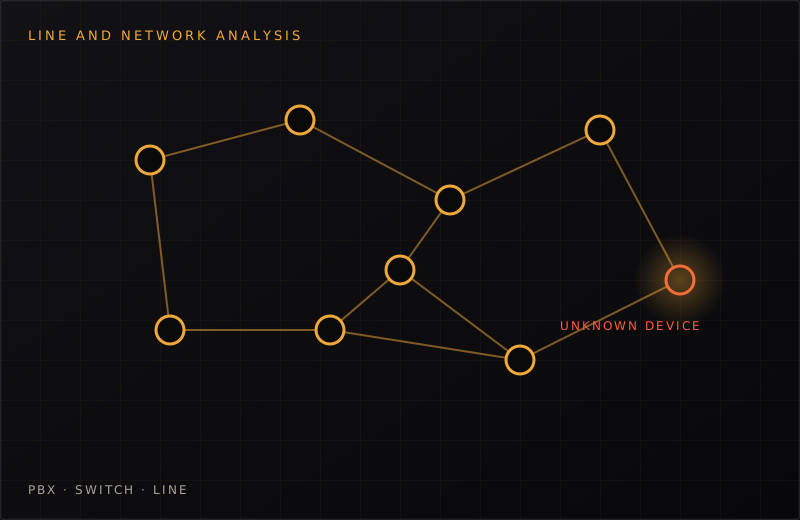
Line, PBX and network analysis
Eavesdropping is not always in the room; it can be on the line, in the PBX and on the network.
Explore →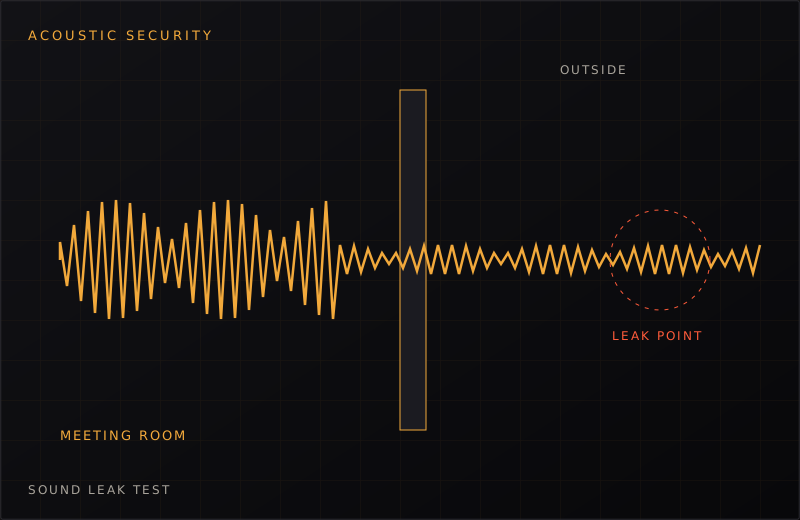
Acoustic security and sound leakage test
Even with no device in the room, if speech leaks past the wall, door and ventilation, it can be overheard.
Explore →Periodic TSCM contract
A sweep is a photograph of that day.
Explore →Emergency TSCM sweep
If you have noticed a leak or have a critical meeting tomorrow, do not wait.
Explore →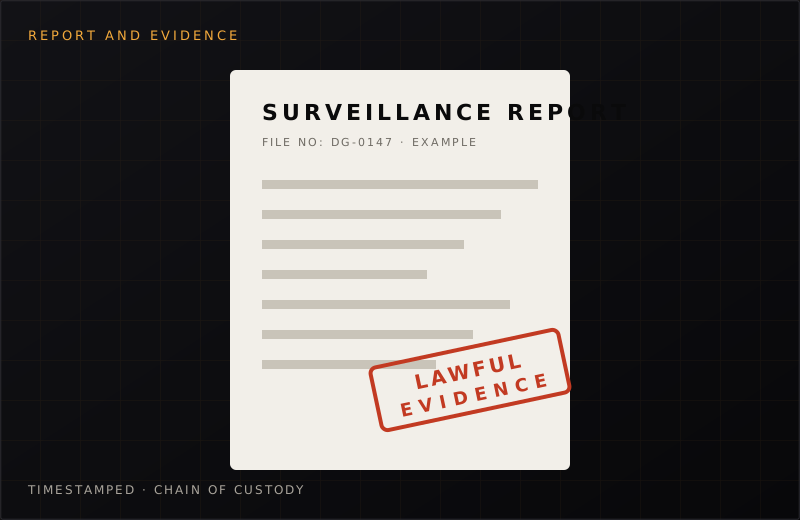
What to do if a bug is found
The first thing you do after finding a device can decide the fate of the legal process that follows.
Explore →Am I being bugged? Signs and quick check
The suspicion you feel may not be baseless, but not every sign means bugging.
Explore →TSCM process and sample report
Knowing in advance what to expect from a sweep builds trust.
Explore →TSCM methods and equipment classes
No single method is enough.
Explore →- Office and meeting room
- Home
- Vehicle
- Hotel room
- Board and R&D unit
- Lawyer and consultant office
- RF spectrum analysis
- NLJD (non-linear junction)
- Thermal imaging
- Optical lens detection
- Physical inspection
- Line and PBX analysis
- Network scan
- Acoustic leakage test
- GSM bug
- RF transmitter
- Voice recorder
- Wireless hidden camera
- Wired microphone
- GPS/GSM tracker
- Spyware
- Unauthorised network device
TSCM · Technical surveillance countermeasures
TSCM process
Confidential initial call
We talk on a secure channel away from the space and devices you suspect. We listen to what, where and why you suspect, and define the scope.
Appointment and security
The sweep date is discussed only with the people who need to know and away from the space to be swept. No sensitive talk takes place in the space beforehand.
Physical inspection
The space and its items are inspected visually: sockets, ceiling, lighting, electronics, furniture and newly added objects.
Technical sweep
Devices are searched for with RF spectrum analysis, NLJD, thermal imaging, optical lens detection and line/network analysis.
Findings and evidence preservation
If a suspect device is found it is not moved; it is photographed and its position and technical measurements recorded. The next step is decided with you and your lawyer.
Report and recommendations
Method, equipment, findings, risks and corrective recommendations are delivered as a written report.
TSCM · Technical surveillance countermeasures
What you receive
- A written report with method, equipment and findings
- Photo, position and measurement records
- Risk assessment and corrective recommendations
- Evidence preservation and legal guidance if a device is found
- A follow-up check after the sweep if wanted
FAQ
Frequently asked questions
How can I tell I might be bugged?
Signs are not proof, but private conversations becoming known to the other side, an unfamiliar device in a vehicle or moved items in a room are reasons for suspicion. You can do the check on the signs page; a definite answer needs measurement.
How long does a sweep take?
It depends on the size and complexity of the space. A small room and a multi-floor office are not swept in the same time. The duration is written in the discovery call and quote.
If nothing is found, is everything safe?
A sweep shows the situation at the time. Finding nothing is a good result, but because a device can be placed later we recommend periodic sweeps for sensitive environments.
What happens if a device is found?
The device is not moved; it is photographed and recorded. We then settle with you and your lawyer what to do for a criminal complaint and evidence preservation.
Is a sweep legal?
Yes. TSCM is about finding devices, not installing them or listening. We only sweep on your property and at your request.
TSCM · Technical surveillance countermeasures
Related pages
Am I being bugged? Signs and quick check
The suspicion you feel may not be baseless, but not every sign means bugging.
Explore →Office and meeting room bug sweep
Secure the room where your trade secrets are discussed, by measurement, before an important meeting.
Explore →Vehicle bug and GPS tracker detection
If someone knows where you go, the vehicle is the first suspect.
Explore →Hidden camera detection
Hidden cameras can be concealed inside everyday objects such as clocks, chargers, smoke detectors and sockets.
Explore →Phone spyware check
Your phone is a summary of your life.
Explore →Periodic TSCM contract
A sweep is a photograph of that day.
Explore →BLOG
Latest articles
What is TSCM? A guide to technical bug detection
What is TSCM (technical surveillance countermeasures), how is it done, which devices are searched for and what are its limits? A…
Am I being bugged? Myths and facts
A click on the phone, fast-draining battery, heating: signs of bugging? Common myths, more meaningful signs and when measurement…
How to spot a hidden camera: hotel, home and office
How to find a hidden camera: simple checks, what objects they can hide in, what to do in a hotel room and when a professional…
Legal framework: Dedektif Go works only by lawful methods. We do not wiretap, read messages or email, install unauthorised tracking software, track location without permission or access official records by covert means. Findings are reported in a form usable as evidence. Read what we do and do not do.
Let's talk first. A confidential, free initial call.
Tell us your situation and we will define the lawful route together. Your details are not shared with third parties.