Definition
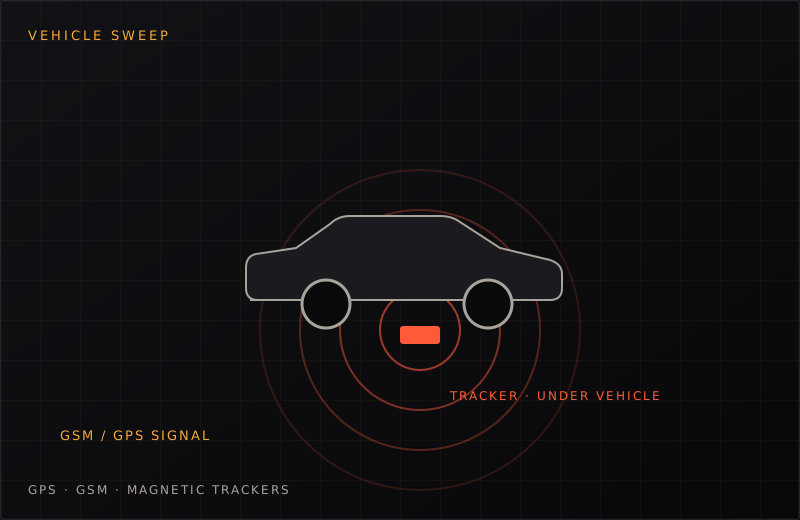
TSCM is a systematic technical examination aimed at finding hidden listening, recording, imaging and tracking equipment in a space, vehicle or device. It is also known as "bug sweeping". Its aim is to turn suspicion into a measurable result.
Which methods are used?
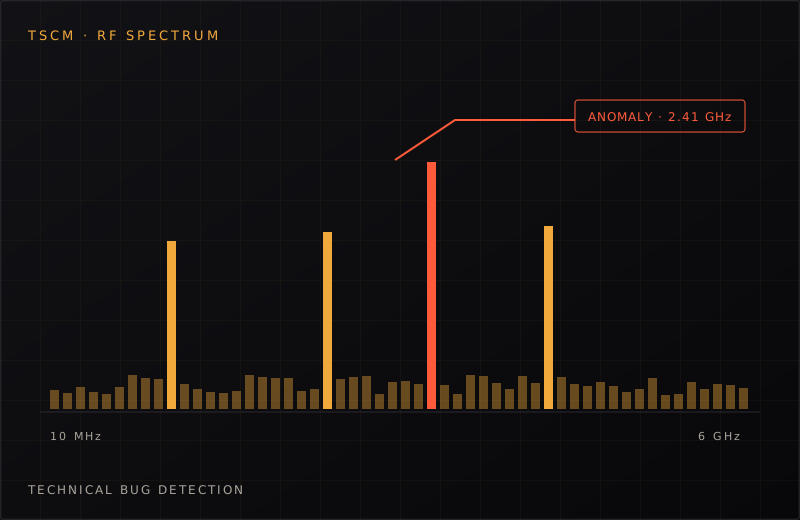
- RF spectrum analysis: finds transmitting devices.
- NLJD: looks for objects containing electronic circuits even when switched off.
- Thermal imaging: shows the heat of running electronics.
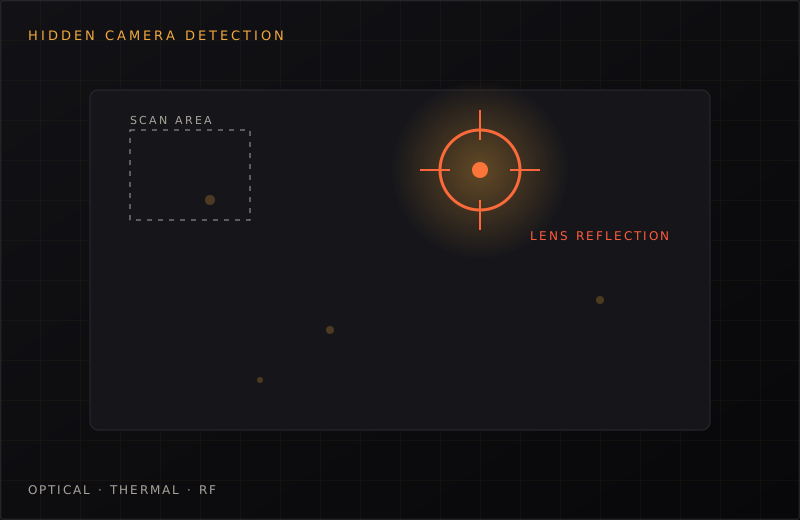
- Optical lens detection: finds hidden camera lenses.
- Line and network analysis: inspects phone lines, PBX and network devices.
- Physical inspection: looks for newly added or moved objects.
No method is enough on its own
Each method has things it cannot see; for example an RF sweep cannot see a recorder that does not transmit. Several methods are therefore used together. See the TSCM methods and equipment classes page for details.
Limits and expectations
No sweep gives an "absolutely clean" guarantee. A sweep shows the situation at the time it is done and does not cover a device placed later. A periodic sweep is therefore advised for risky environments.
Who is it for?
It suits companies and boards, law and consultancy offices, people holding sensitive talks and individuals who suspect their home or vehicle. See the TSCM overview.