
TSCM · Technical surveillance countermeasures
What to do if a bug is found
The first thing you do after finding a device can decide the fate of the legal process that follows. Stop first, then act in a planned way.
First steps
Do not touch, remove, move or switch off the device. Photograph it in place and from several angles; note the time and date. Keep using the space without alerting the other party and do not hold sensitive conversations near the device.
Legal steps
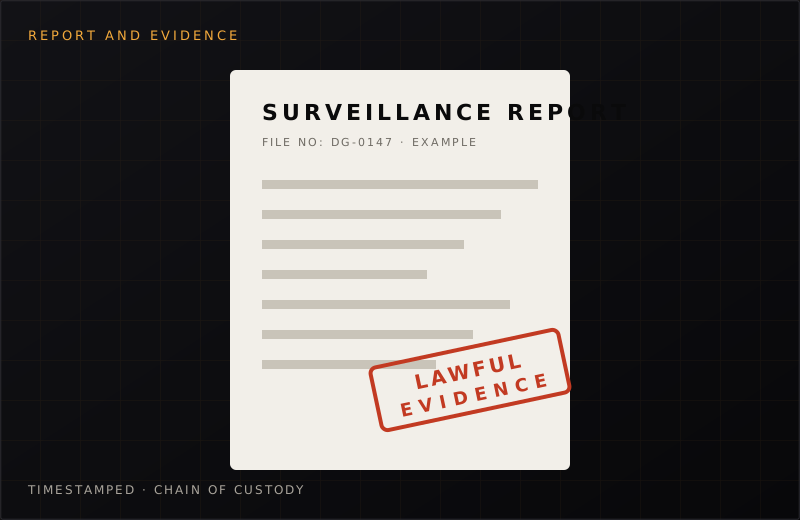
Contact a lawyer. Listening to and recording another person's conversations or violating the privacy of private life is an offence (for example TCK arts. 133 and 134). You may file a criminal complaint with the prosecutor; the device is taken as evidence by the police or an expert. We support the chain of custody with the detection report and photographs.
The "who placed it" question
We do not guess who placed the device and we accuse no one. Traces such as brand, serial and any SIM or memory inside can be used by the competent authorities to reach the source.
TSCM · Technical surveillance countermeasures
What we do
In-place photography
Recording position and appearance.
Technical measurement record
Transmission frequency and signal measurement.
Chain-of-custody form
A record of how the device is kept.
Complaint support
Preparing the report and documents.
Safe-environment advice
How to hold sensitive talks after a find.
TSCM · Technical surveillance countermeasures
How we work
Confidential initial call
We talk on a secure channel away from the space and devices you suspect. We listen to what, where and why you suspect, and define the scope.
Appointment and security
The sweep date is discussed only with the people who need to know and away from the space to be swept. No sensitive talk takes place in the space beforehand.
Physical inspection
The space and its items are inspected visually: sockets, ceiling, lighting, electronics, furniture and newly added objects.
Technical sweep
Devices are searched for with RF spectrum analysis, NLJD, thermal imaging, optical lens detection and line/network analysis.
Findings and evidence preservation
If a suspect device is found it is not moved; it is photographed and its position and technical measurements recorded. The next step is decided with you and your lawyer.
Report and recommendations
Method, equipment, findings, risks and corrective recommendations are delivered as a written report.
TSCM · Technical surveillance countermeasures
What you receive
- Detection report and photos
- Chain-of-custody form
- Information summary for the lawyer
FAQ
Frequently asked questions
Can I remove it myself?
We do not advise it. Removing it can damage evidence, alert the other party and cause data loss in some devices. Photograph first and consult a lawyer.
TSCM · Technical surveillance countermeasures
Related pages
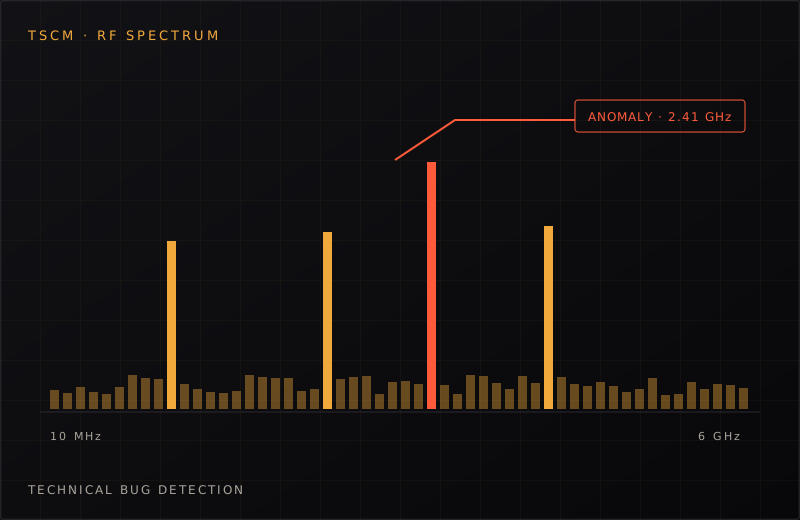
TSCM: technical bug detection
Measurement, not guesswork, tells you whether you are bugged.
Explore →
Lawyer coordination and testimony support
Evidence is valuable when it serves the strategy your lawyer runs.
Explore →Evidence gathering and reporting
Information is evidence only if it can be used in court.
Explore →TSCM process and sample report
Knowing in advance what to expect from a sweep builds trust.
Explore →BLOG
Latest articles
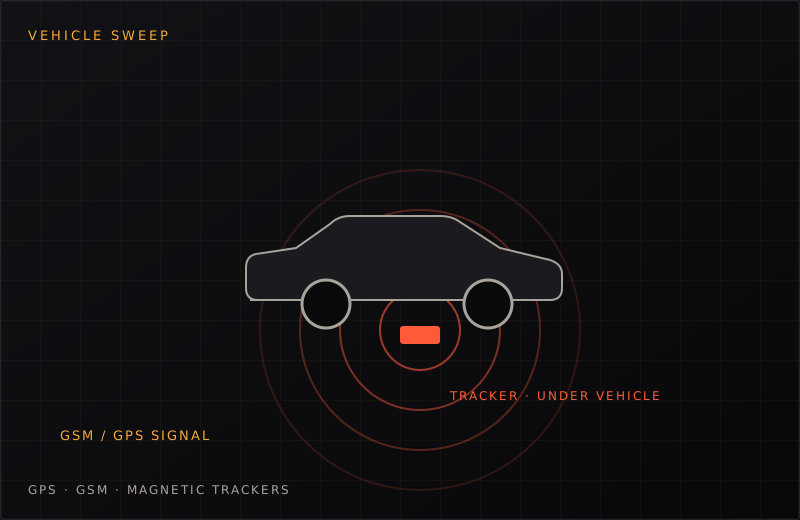
How to find a GPS tracker in a car
If you suspect a tracker in your car, where should you look? Exterior, interior, OBD, connected-car account and what to do when…
Eavesdropping and secret recording offences: the framework in Turkish law
Eavesdropping, secret recording and violation-of-privacy offences: the general framework in the Turkish Criminal Code, what a…
Legal framework: Dedektif Go works only by lawful methods. We do not wiretap, read messages or email, install unauthorised tracking software, track location without permission or access official records by covert means. Findings are reported in a form usable as evidence. Read what we do and do not do.
Let's talk first. A confidential, free initial call.
Tell us your situation and we will define the lawful route together. Your details are not shared with third parties.