Divorce grounds and proof
The Civil Code regulates grounds such as adultery, attempt on life and grave mistreatment, committing an offence and leading a dishonourable life, desertion, mental illness and the fundamental breakdown of the marriage (for example arts. 161-166). The burden of proof and time limits differ for each ground; for some grounds, for instance, there are forfeiture periods. Your lawyer's opinion should therefore be taken on deadlines and the concrete case.
Types of evidence
Common types of evidence are:
- Witness statements
- Photo and video records (if lawfully obtained)
- Correspondence and messages (on your own device and lawful)
- Official documents, minutes and forensic reports
- Bank and spending records (requested by legal route)
- Expert reports
Unlawful evidence
Data obtained by entering another person's phone, account or home without permission is generally regarded as unlawfully obtained evidence and the court may not base its decision on it. What is more, such an act can itself constitute an offence. When collecting evidence the question should therefore be "what can I lawfully reach", not "what can I find".
The role of a detective report
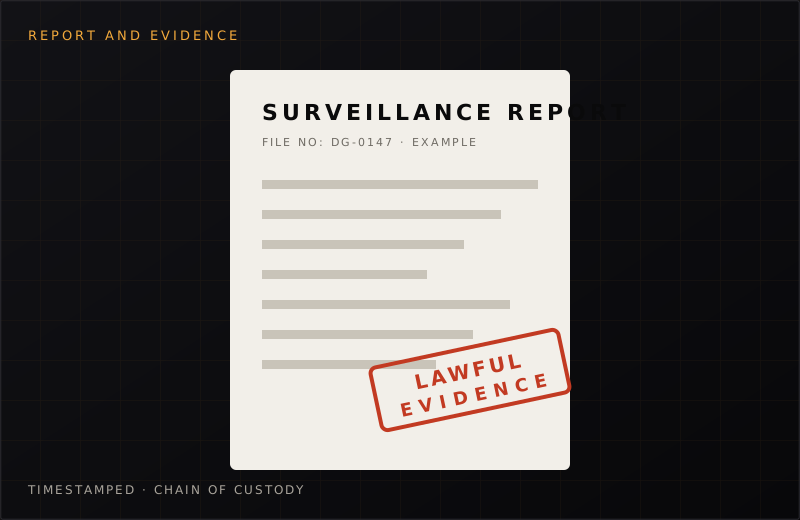
A lawful observation report can be submitted as a factual record that supports witness statements and other evidence. It does not guarantee a result on its own; the court assesses all the evidence together. See the divorce evidence support and evidence and reporting pages.